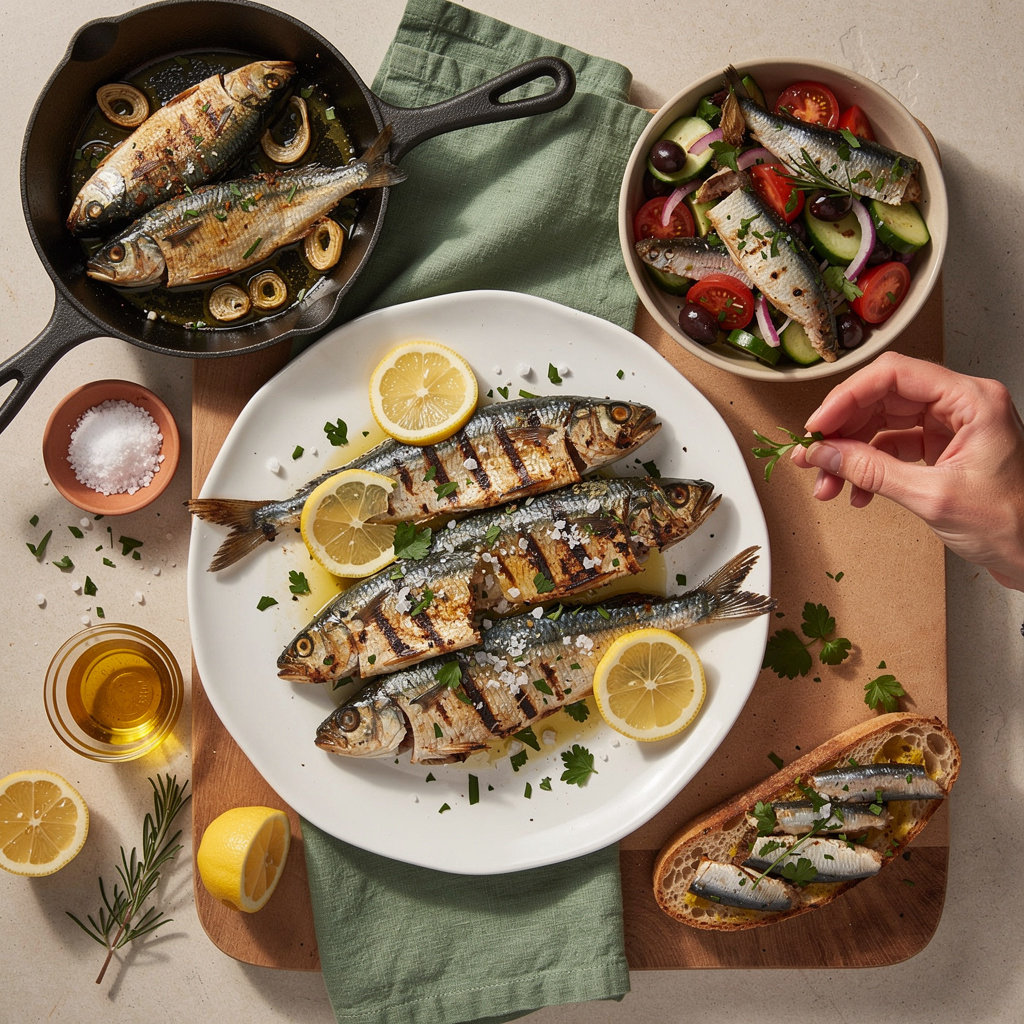
Understanding Sardine Varieties
Not all sardines are created equal. The species, size, and origin of the sardines you choose dramatically affect flavor, texture, and how they perform in the kitchen. At Mike's Sardines, we focus on helping you understand what makes each variety special.
Pacific Sardines
Pacific sardines—sourced locally from San Diego waters when available—are medium-sized with a slightly robust flavor and firm texture. They're excellent for grilling whole, pan-frying, or smoking. The seasonal availability of Pacific sardines makes them a prized local catch, and their freshness is unmatched when sourced dock-to-table.
European & Spanish Sardines
Smaller and more delicate than their Pacific cousins, European sardines (particularly Spanish varieties) are prized for their tender flesh and subtle, refined flavor. They're ideal for elegant preparations, curing, or serving as part of a charcuterie board. When fresh, they're a culinary treasure.
Size & Grade Matters
Sardine size affects both flavor intensity and cooking method. Larger sardines have more pronounced flavor and are better for grilling or stuffing. Smaller sardines are more delicate and work beautifully in raw or lightly cooked preparations. We can help you choose the right size for your recipe.
Seasonal Availability
Sardine seasons vary by species and region. Pacific sardines peak in summer and early fall, while imported varieties are available year-round. Peak seasons mean fresher fish, better prices, and more reliable supply. We'll always tell you what's in season and why availability changes throughout the year.
How to Spot Quality
- Bright eyes: Clear, bulging eyes signal freshness
- Shiny skin: A silvery, iridescent finish indicates proper handling
- Fresh ocean scent: Should smell like the sea, never ammonia or "fishy"
- Firm flesh: Gently press—the flesh should spring back, never mushy
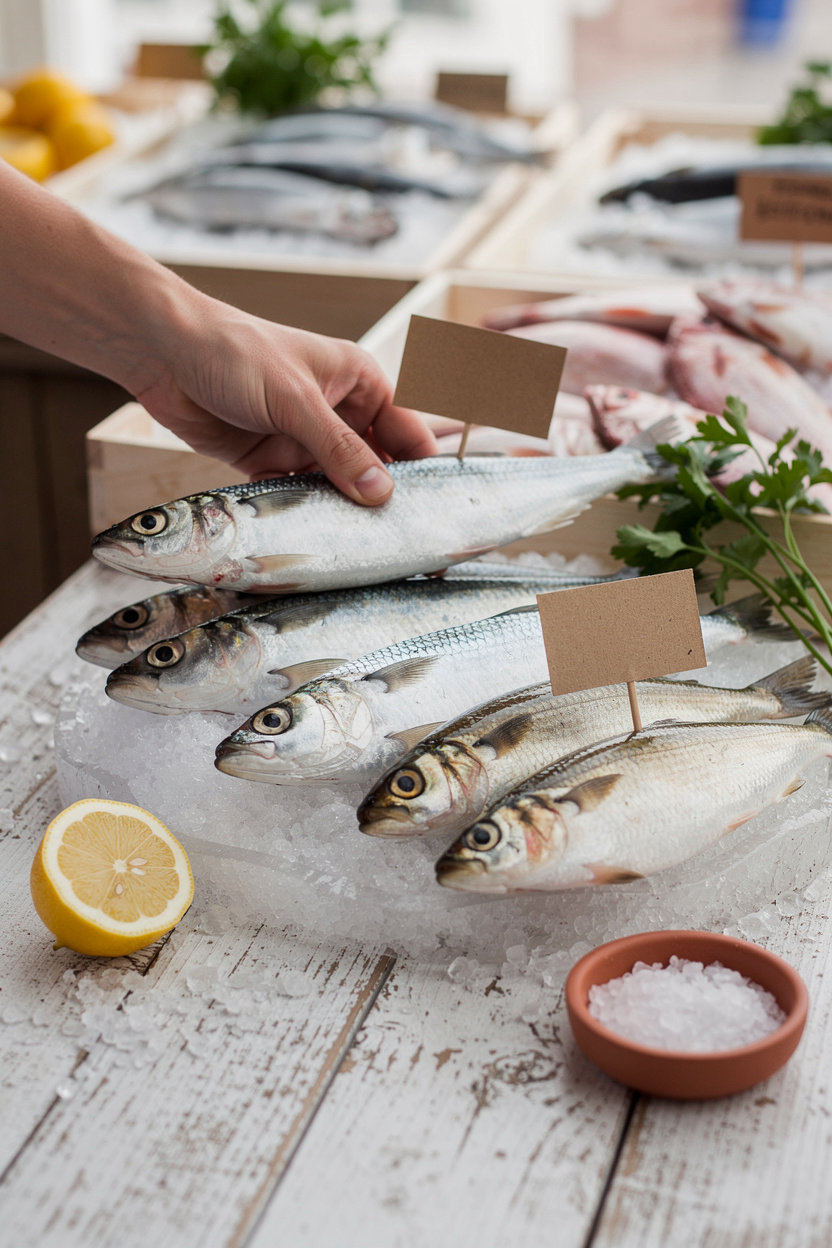
How to Choose Fresh Sardines
When you're buying fresh sardines—whether at a San Diego fish market or specialty seafood retailer—knowing what to look for makes all the difference. Fresh sardines should feel firm, smell like the ocean, and show clear signs of quality. Here's exactly what to check.
Visual Indicators of Freshness
The first thing you notice about fresh sardines is how they look. Quality sardines have a brightness and clarity that tells you they're recently caught.
- • Bright, clear eyes: Fresh sardines have eyes that are clear and slightly protruding. Cloudy or sunken eyes signal age or poor handling.
- • Shiny, intact skin: The skin should have a natural metallic sheen with colors that are vibrant—silver, blue-green, or bronze depending on the variety. Dull, discolored, or bruised skin means the fish isn't fresh.
- • Firm body: When you look at the sardine, it should hold its shape. A limp or collapsing body indicates the flesh has started to break down.
- • Intact fins and gills: Fins should be whole and not torn. Gills should be a deep red or pink color, not brown or gray.
The Smell Test
This is the most reliable indicator of freshness. Never skip smelling the fish before you buy.
- • Fresh ocean scent: Quality fresh sardines smell like the sea—clean, briny, and slightly sweet. It's a pleasant smell that signals a healthy fish.
- • No ammonia or sour smell: If you detect a sharp, chemical ammonia smell or any sour note, the sardines are past their prime. Trust your nose—this is a red flag.
- • No "fishy" odor: Ironically, that strong "fishy" smell many people associate with seafood signals older fish. Fresh sardines smell fresh, not pungent.
Pro tip: A reputable fish market will encourage you to smell the product. If they seem reluctant, that's a warning sign.
Touch and Texture
A gentle touch tells you whether the flesh is firm and ready for cooking.
- • Firm and elastic: Press the flesh gently with your finger. It should feel firm and spring back slightly. This indicates the muscle structure is intact.
- • Not mushy: If the flesh feels soft, mushy, or leaves an indent when you press, the fish is deteriorating and should be avoided.
- • Scales should be tight: Run your hand along the body. The scales should feel secure and not flake off easily.
Red Flags: Signs of Poor Quality or Age
- ✕ Cloudy, sunken, or missing eyes
- ✕ Dull, gray, or discolored skin
- ✕ Ammonia, sour, or overly "fishy" smell
- ✕ Soft, mushy, or flabby flesh
- ✕ Torn fins, damaged scales, or visible bruising
- ✕ Brown or gray gills instead of red or pink
Questions to Ask When Buying
A trustworthy fish market staff member will answer these questions openly. If they can't or won't, consider shopping elsewhere.
When were these caught?
Fresh sardines should have been caught within 1-2 days. Anything older than that is less ideal for eating fresh.
Where do these sardines come from?
At Mike's Sardines, we prioritize local San Diego sourcing when available. Knowing the origin helps you understand sourcing practices and sustainability.
How have they been handled and stored?
Fresh fish should be kept on ice or in a cold case. Ask if they've been properly iced since catch.
Can I smell them first?
Any reputable market welcomes this. If they seem hesitant, that's a red flag about their product quality.
Storage Immediately After Purchase
Fresh sardines are perishable. Once you've bought them, keep them cold on the ride home and store them properly.
- • Keep them on ice: Ask the fish market to pack them in ice. Transport them home in a cooler if possible, especially on warm days.
- • Refrigerate immediately: Place sardines in the coldest part of your refrigerator (32-35°F) in a shallow container. Pat them dry and place them on a bed of ice if you have it.
- • Use within 1-2 days: Fresh sardines are best enjoyed as soon as possible. The sooner you cook them, the better the quality and flavor.
Ready to Buy Fresh Sardines?
At Mike's Sardines in San Diego, we source fresh sardines with quality and freshness standards you can trust. Ask us about current availability and seasonal varieties.
Email Us for Current AvailabilityStorage & Handling
Fresh sardines are delicate—proper storage and handling ensure they stay at their peak quality from purchase to plate. Here's how to keep your sardines fresh and ready to cook.
Refrigeration
Fresh sardines require cold temperatures to stay fresh. Store them in the coldest part of your refrigerator—ideally between 32–35°F (0–2°C).
At this temperature, fresh sardines will stay in peak condition for 1–2 days. If you're not cooking them immediately, consider freezing instead for longer storage.
Ice Packing
When storing fresh sardines at home, place them on a bed of crushed ice in a shallow container. The ice keeps them at the ideal temperature while allowing excess water to drain.
Change the ice every day to maintain freshness. Never let sardines sit directly in meltwater—this speeds deterioration.
Shelf Life
Refrigerated: 1–2 days maximum. Fresh sardines are perishable—use them quickly.
Frozen: Up to 3 months. Freeze sardines in an airtight container or freezer bag, removing as much air as possible. Label with the date so you know when you froze them.
Freezing for Extended Storage
Freezing sardines extends their availability. Wrap them individually in plastic wrap, then place in a freezer bag. This prevents freezer burn and makes it easy to thaw just what you need.
Frozen sardines work well for cooking but won't have quite the same texture as fresh. Thaw in the refrigerator overnight before cooking.
Thawing & Preparation
Always thaw frozen sardines in the refrigerator, never at room temperature. This keeps them cold and safe.
Once thawed, cook them within a few hours. Don't refreeze sardines after thawing—use them fresh or discard if they've been at room temperature for more than 2 hours.
How to Tell If Sardines Have Gone Bad
Trust your senses. Bad sardines show clear warning signs:
- Smell: Strong ammonia or sour odor (fresh sardines smell like the ocean)
- Appearance: Dull, discolored, or slimy skin
- Texture: Soft or mushy flesh that doesn't spring back
- Eyes: Cloudy or sunken (fresh sardines have clear, bright eyes)
When in doubt, throw them out. Fresh sardines are an investment in quality—don't compromise with fish that's past its prime.
Quick Reference: Storage Timeline
Questions about storage or freshness? Reach out to us—we're happy to help you get the most from your sardines.
Email Us with QuestionsSimple Ways to Cook Fresh Sardines
Fresh sardines are forgiving, quick to cook, and packed with flavor. Whether you're grilling, pan-frying, or building a salad, these simple preparations let the fish shine.
Grilled Sardines with Lemon & Herbs
Pat sardines dry, brush lightly with olive oil, season with sea salt and cracked pepper. Grill over medium-high heat 3–4 minutes per side until skin crisps. Finish with fresh lemon juice, parsley, and a drizzle of good olive oil. Serve immediately.
Pan-Fried with Garlic & White Wine
Heat olive oil in a skillet, add thinly sliced garlic until fragrant. Place sardines skin-side down, cook 2–3 minutes. Flip, add a splash of white wine and fresh thyme. Cook another 2 minutes. The pan sauce is the best part—don't skip it.
Fresh Sardine Salad
Grill or pan-fry sardines, let cool slightly, then break into bite-sized pieces over mixed greens, cherry tomatoes, cucumber, and red onion. Dress with a simple vinaigrette of lemon juice, olive oil, Dijon mustard, and salt. Mediterranean simplicity at its best.
Sardines on Toast
Toast crusty bread, rub with a cut garlic clove, top with pan-fried sardines, a squeeze of lemon, and flaky sea salt. This Spanish-style appetizer takes five minutes and impresses every time.
All recipes serve 2–3 as a main or 4 as an appetizer. Cooking time: 10–15 minutes start to finish.